
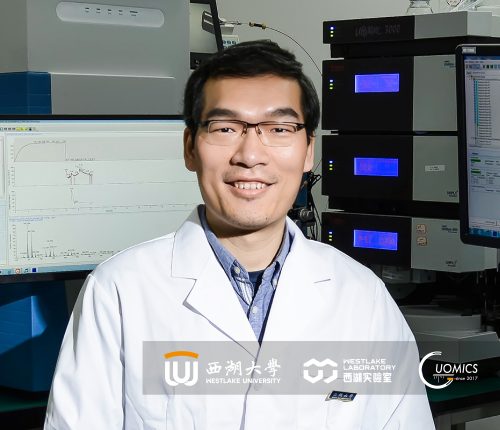
Version 1:
Dr. Tiannan Guo completed his clinical medicine training (1999–2006) at Tongji Medical College, Huazhong University of Science and Technology, and simultaneously pursued studies in biology (2001–2005) at Wuhan University. Subsequently, he earned a Ph.D. in cancer proteomics (2008–2012) in Singapore and conducted postdoctoral research at ETH Zurich (2012-2017). After a brief tenure as Scientific Director of ProCan, Children’s Medical Research Institute, The University of Sydney School in 2017, Dr. Guo relocated to Westlake University in August 2017 as a tenure-track Assistant Professor, promoted to tenured Associate Professor in January 2023, and to Full Professor in July, 2026. He also directs the Westlake Center for Intelligent Proteomics at Westlake Laboratory.
Dr. Guo and his team have developed high-throughput proteomic technologies for micro-scale tissue samples and spatial subcellular proteomics, supporting efforts to address major health challenges including cancer, infectious diseases, and aging. They have constructed MassNet, a billion-scale AI-friendly mass spectrometry corpus, and developed a suite of proteome-focused pre-trained models. In addition, Dr. Guo has led the development of a strategic roadmap for artificial intelligence-driven proteomics, proposed a novel framework for constructing AI-enabled virtual cells, and established ProteinTalks — the first perturbation‑proteomics‑based operational virtual cell model with translational potential. His team has also developed multiple clinical kits based on mass spectrometry proteomics.
Dr. Guo holds the presidency of the Chinese Proteomics Society, and serves as a Council Member of the Human Proteome Organization (HUPO). He is also an Associate Editor of Molecular & Cellular Proteomics and Genomics, Proteomics & Bioinformatics, an Editorial Board Member of Cell Systems and Cell Insight, an Advisory Expert of Cell Reports Medicine, and a Scientific Advisor for Vita and Molecular Systems Biology.
Version 2:
Tiannan Guo, MD, PhD, is a Professor at Westlake University and Founder of Westlake Omics. His lab has developed high‑throughput spatiotemporal proteomic technologies to advance biological and medical research. The team built MassNet, a billion‑scale AI‑ready mass‑spectrometry corpus, alongside a suite of AI models tailored for proteomics. Dr. Guo has led the strategic roadmap for AI proteomics, proposed an innovative framework for AI virtual cells, and developed ProteinTalks — the first perturbation‑proteomics‑based operational virtual cell model with translational potential. Research outcomes from his team are translated through Westlake Omics.
Research Interests:
Biological activities are inherently highly complex. Even single‑cell model organisms such as Escherichia coli and Saccharomyces cerevisiae exhibit marked systemic complexity in their biological processes. Human diseases represented by cancer and Alzheimer’s disease possess even higher‑dimensional spatiotemporal complexity. Reliance on a single disease target or pathway can hardly achieve full mechanistic dissection, precise diagnosis and effective intervention — this underlies why many complex human diseases still lack effective diagnosis and treatment. Proteins are the primary effector molecules of life activities and core targets for drug action. Thousands of proteins assemble into sophisticated molecular machineries that carry out physiological functions across multiple spatiotemporal scales at the cellular, tissue and organismal levels, forming highly intricate proteomic systems. Nevertheless, our current understanding of the spatiotemporal mechanisms governing proteome function remains limited. To address these challenges, we are committed to establishing a spatiotemporal proteomics methodology system, including foundational models for protein identification and quantification, spatial proteomics, and perturbation proteomics. These deliver core technical support for developing AI‑driven virtual cell models. Leveraging model systems including Escherichia coli and Saccharomyces cerevisiae, we integrate multi‑modal and multi‑omics datasets and perform systematic analysis with large‑language models. We explore systematic approaches for constructing virtual cell models to gain a holistic understanding of complex biological principles, thereby advancing the diagnosis and treatment of complex diseases such as cancer and Alzheimer’s disease, alongside the systematic engineering of model organisms.